GIWPS
The institute’s work spans research, data and advocacy, for policymakers, researchers and advocates. The redesign needed a clearer structure for all three and a common way to explore its data, including a Conflict Tracker that until then lived on a separate website.
- 3
- Custom maps, one system
- 181
- Countries in the Global Index
- 25
- Countries tracked, updated monthly
The system00
Three maps on one shared system, and a tracker moved into the CMS, updated from spreadsheets.
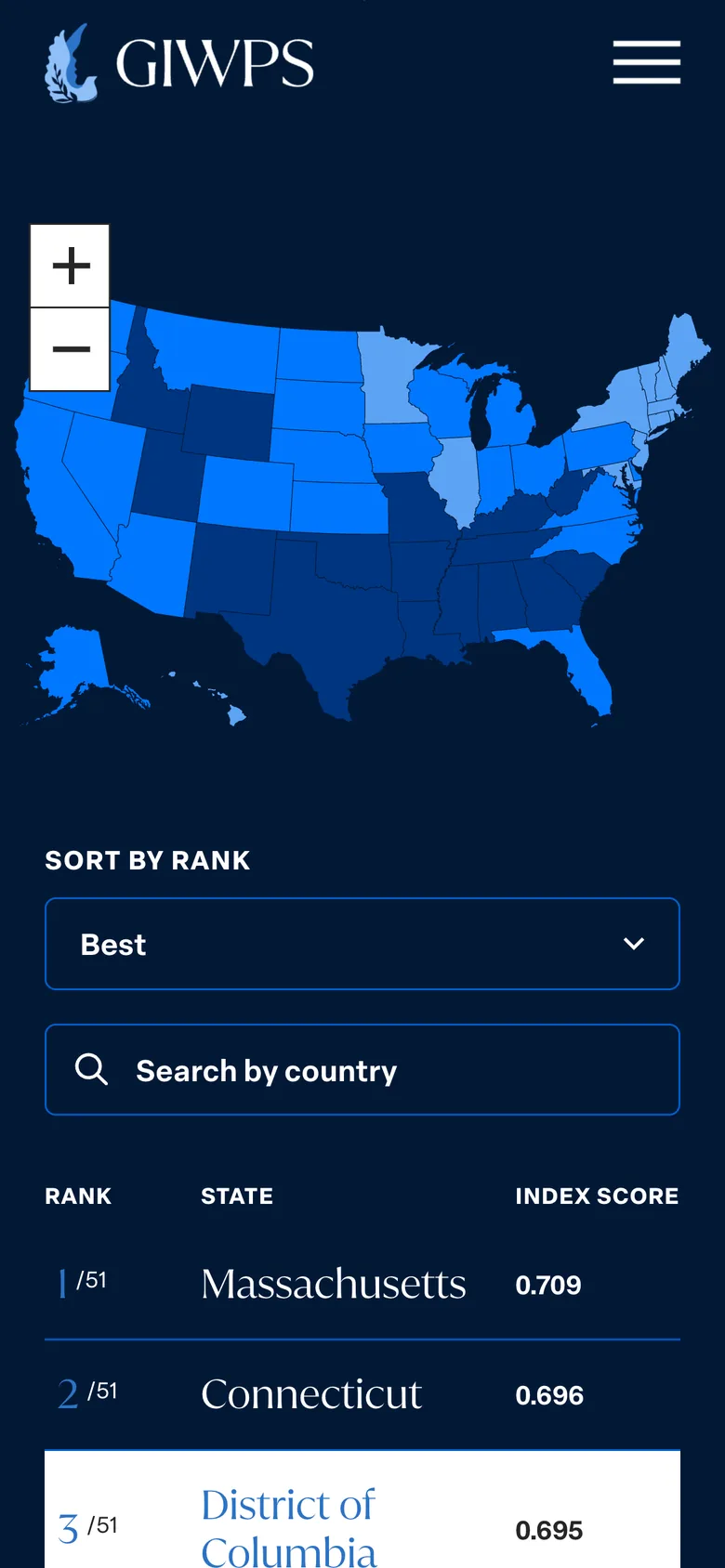
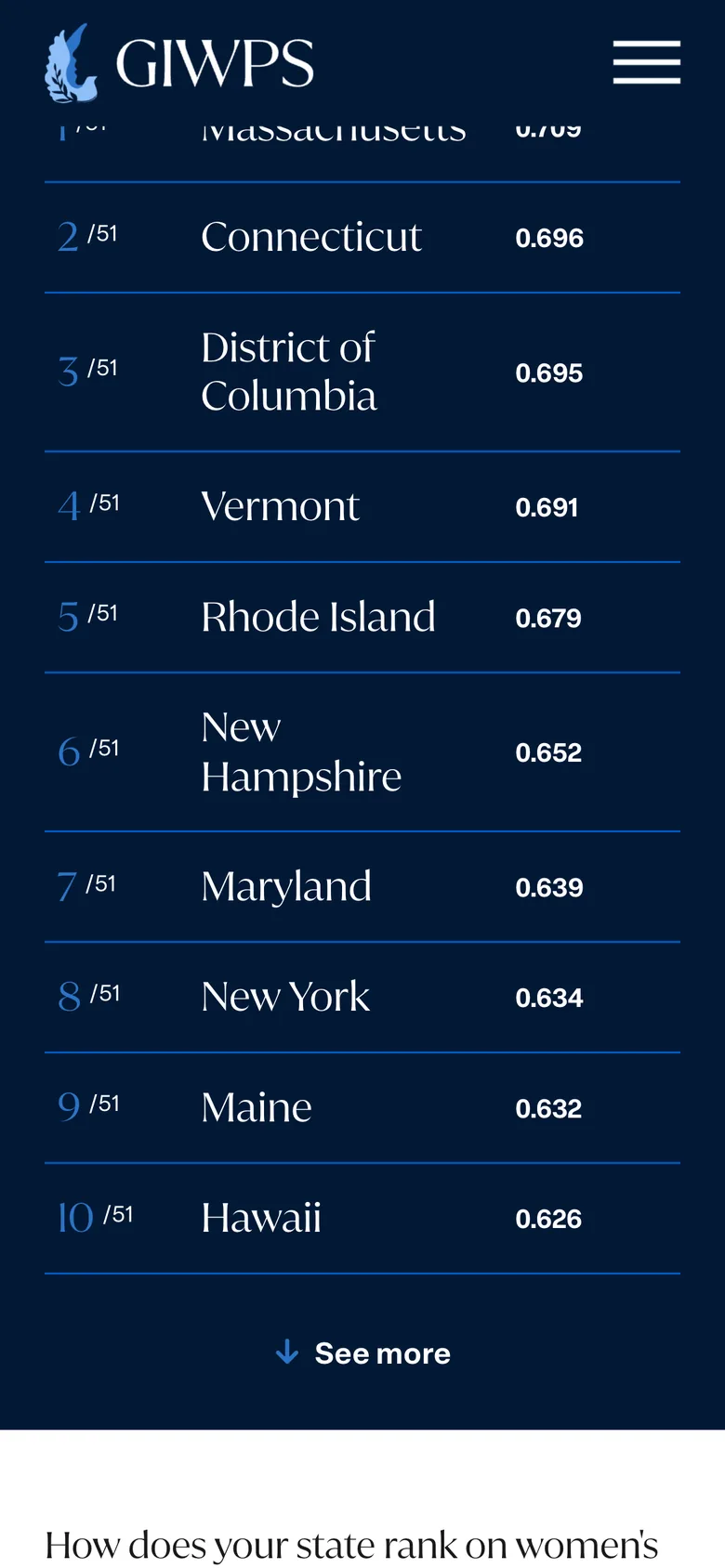
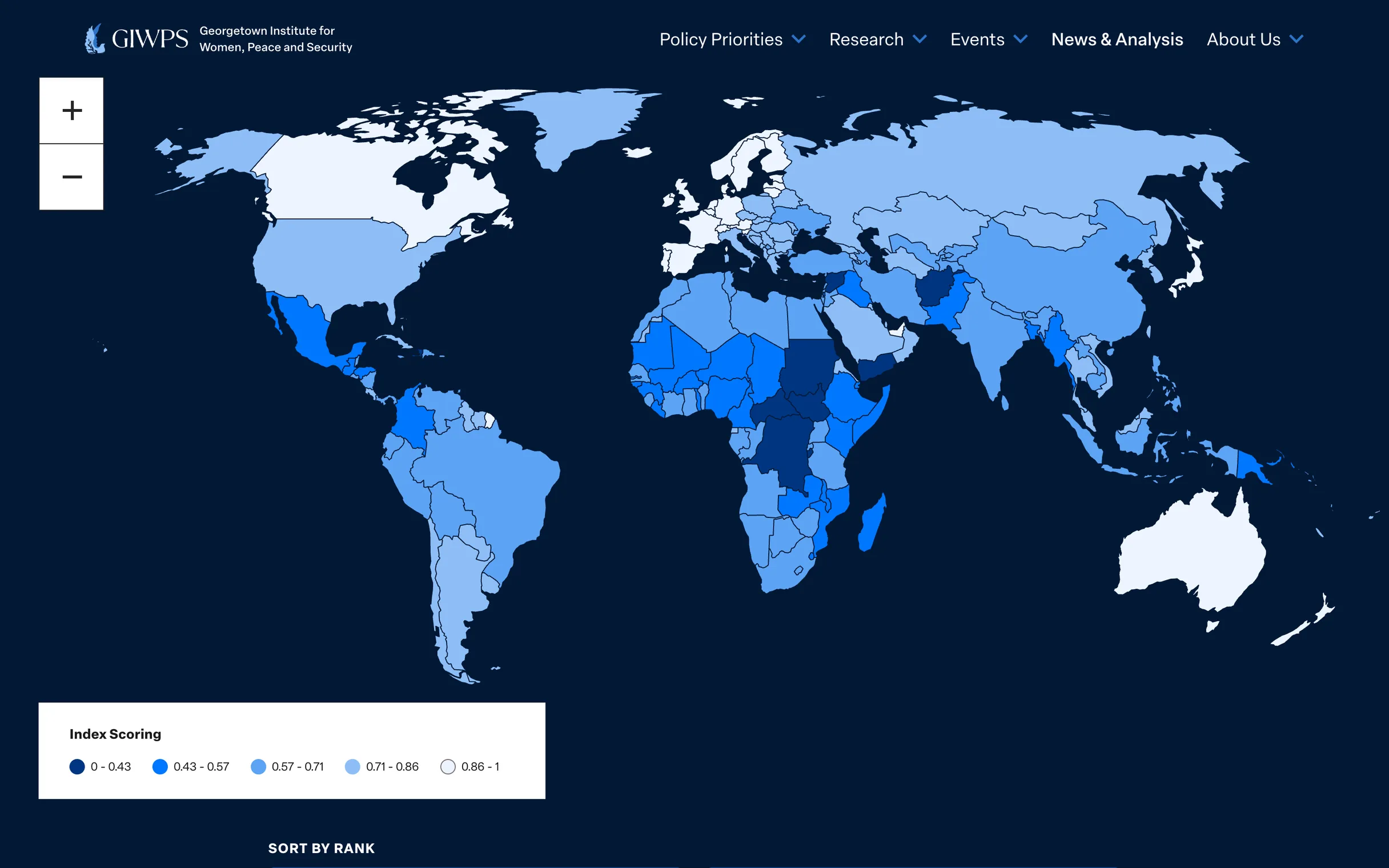
At Wide Eye, I designed the new site and three interactive maps on one shared system: the Global Women, Peace and Security Index, the Conflict Tracker and the U.S. Index. The indexes pair each map with a ranked, searchable list, every country gets a page of its own, and the tracker moved into the CMS, where the team updates it from spreadsheets.
One site for research, data and advocacy01
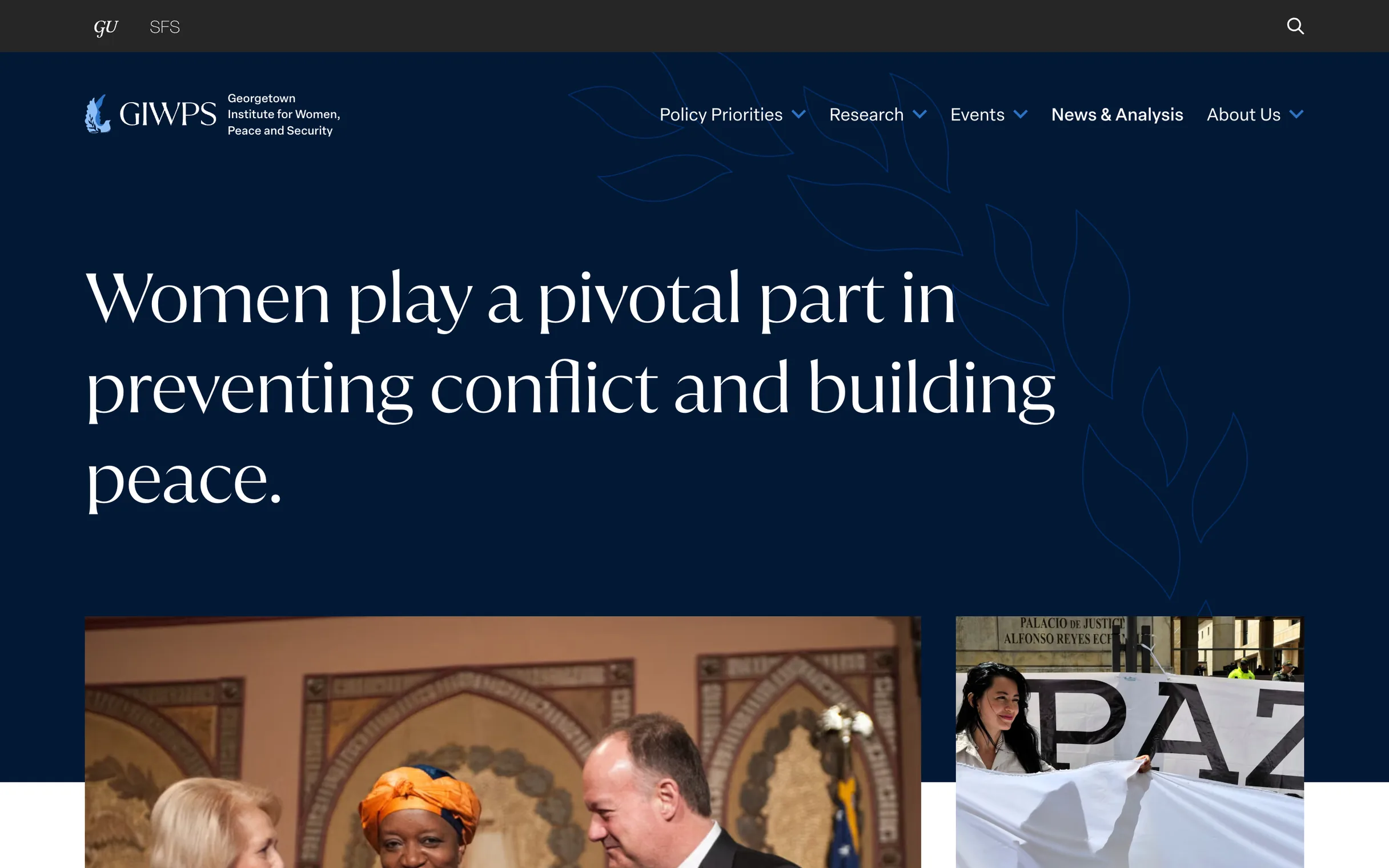
A simplified navigation and a flatter architecture bring the institute’s research, data and advocacy forward, so each audience reaches its material without digging.
The Conflict Tracker, brought in-house02
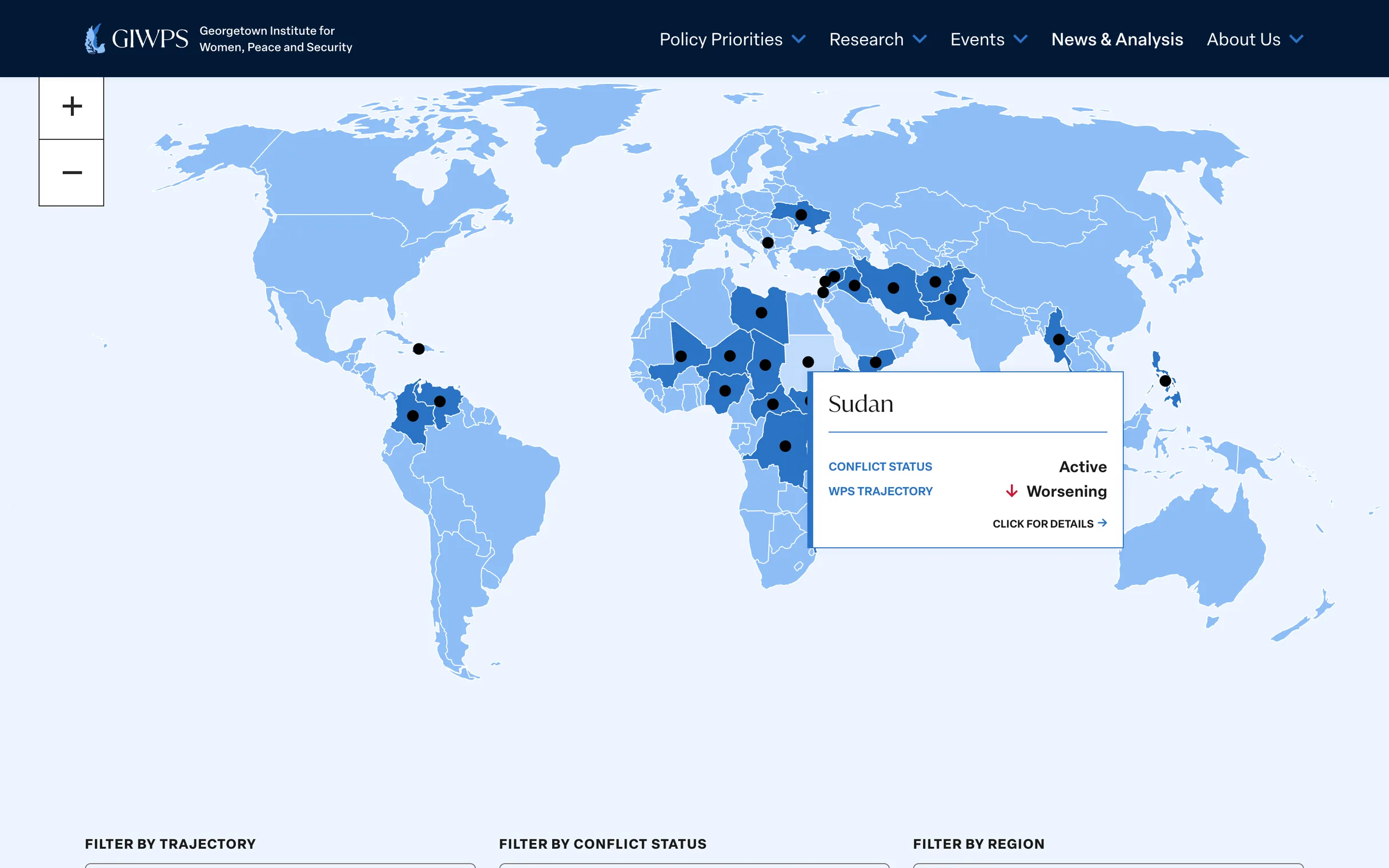
Once a separate website, the tracker now lives inside the main site and maps 25 countries. The team edits it in the CMS from spreadsheets, and hovering a country shows its conflict status and WPS trajectory.
Every country, a briefing03
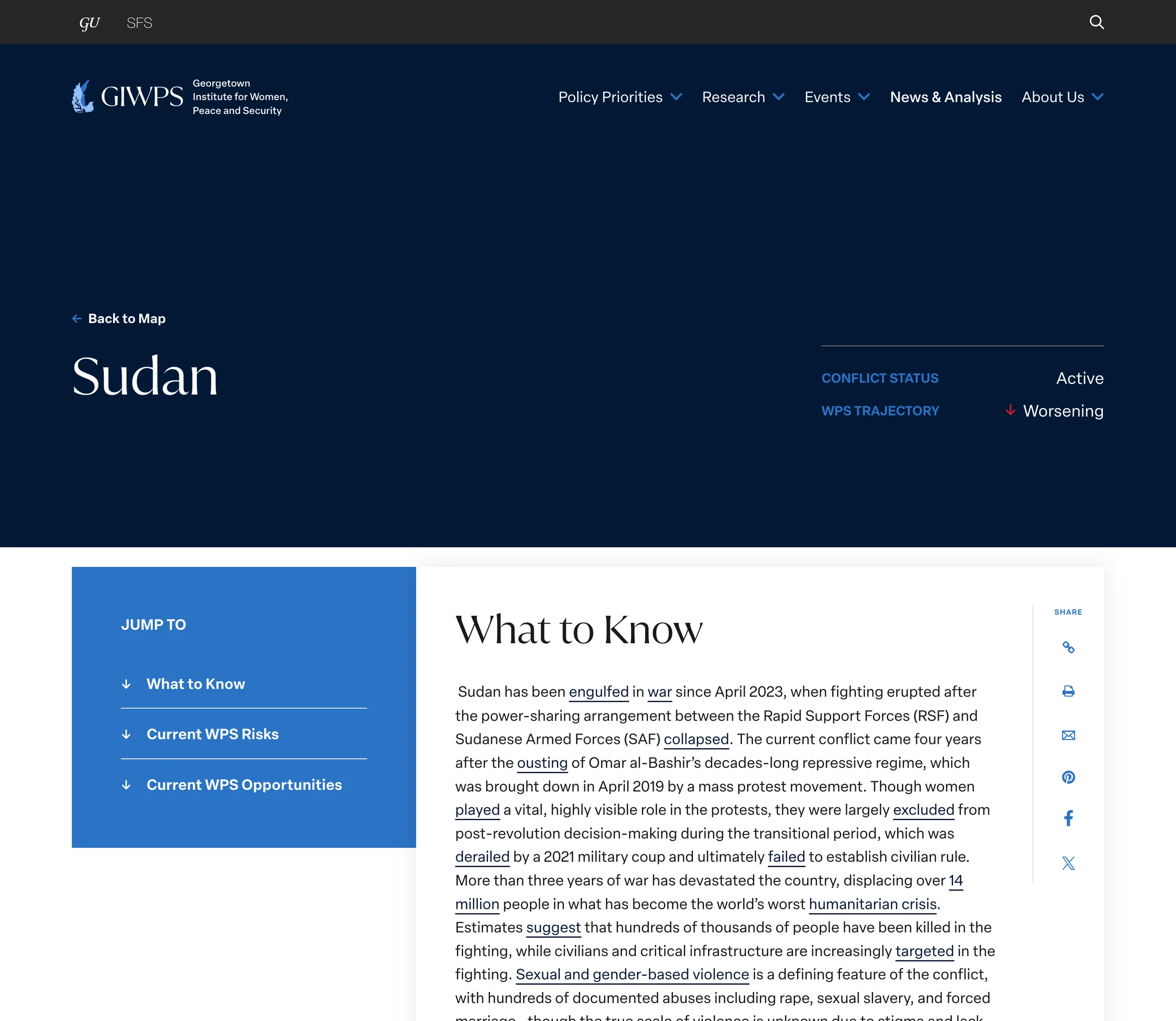
Each country opens a briefing built for quick reading: what to know, current risks and opportunities, and the date of the last update, so readers can judge how current it is.
Scores with context04
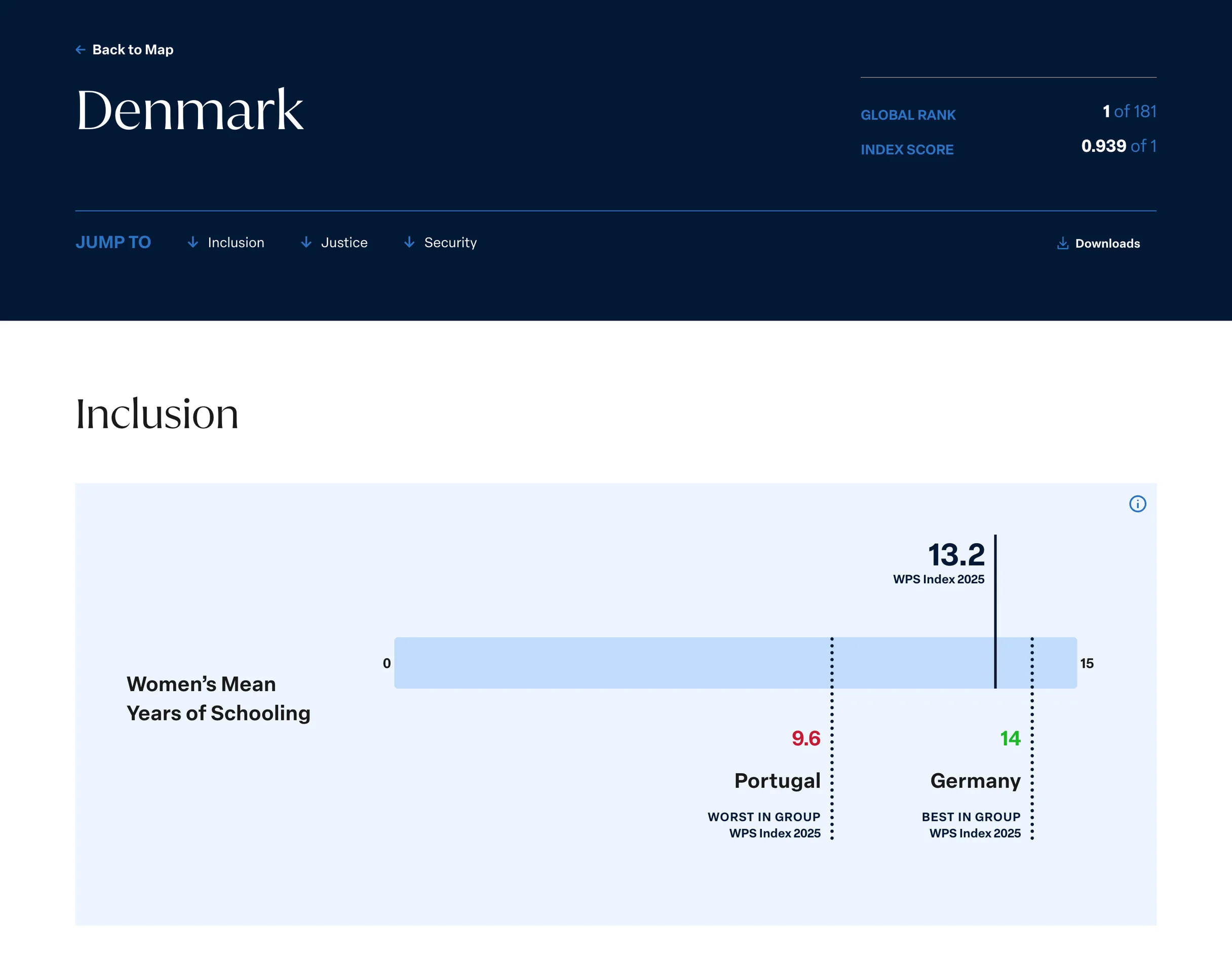
A rank alone says little, so each country page pairs its rank and score with every indicator charted against the best and worst in its group, across inclusion, justice and security.
One system, extended to 50 states05
The U.S. Index reuses the same map, sort and ranked list for all 50 states and DC, so national data reads the same way as global.